Judea Desert Hikes, near the Dead Sea
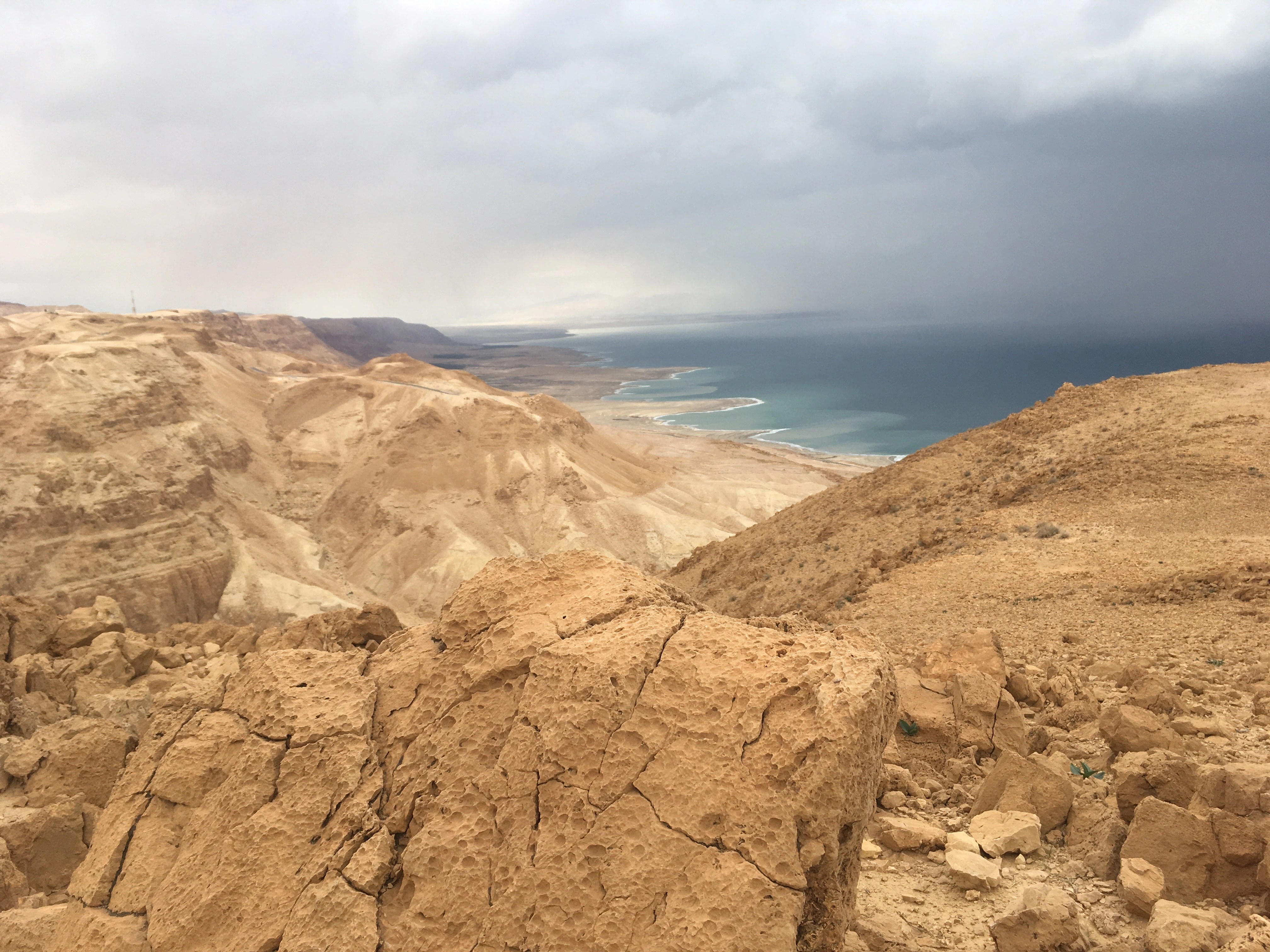
3 day Hiking in Ein Gedi and Wadi Darga #
When?
December 2018
Day 1: Bus from Jerusalem to Ein Gedi Nature Reserve … sleeping on the beach by the Dead Sea near Wadi Darga in front of Metsoke Dragot Junction
Day 2: Walking the Wadi Darga, sleeping on top of the canyons
Day 3: Walking around Wadi Draga and descending down to Mitspe Shalem MOs … taking a bus back to Jerusalem
a mobile app called Amud Anan(It’s all in Hebrew but you can google translate) + paper map (couldn’t find any english map)
30L bag, trail running shoes, sandals, long sleeve top + trousers, scarf, thermals, yoga mat (only mattressy thing I had), sleeping bag, headlamp, toilet paper, Swiss army knife, food & water (loads), maps, sunhat (super important), sunscreen, my kindle, notepad (for doodling), battery pack, student ID (you get discounts I think)
cell phone reception
- no cell phone reception in the canyons in Wadi Darga (except for along the ridges of the cliffs close to the Dead Sea)
After walking the Golan Trail along the Syrian border, I was really itching for another desert hike. The problem was, I didn’t know where or where to get all the necessary information, and I knew I lacked gear.
And as always, someone gave me a helping hand.
Just before arriving in Jerusalem, a friend of mine had told me about couchsurfing, a platform where travelers can host or be hosted by other travelers in their homes. The fact that you get to crash at someone’s place for free was appealing, but I was more interested in being able to see the homes and the lives of local people and how they went about their lives. So I decided to give it my first try in Jerusalem.
I found a host, who had accepted me despite me having no references. He was a school teacher and a guide, and knew a lot about the history, the politics and the geography of the place. He was also a big time traveler and he showed me his amazing photo collections and scrap books from his trips to Africa. It turns out that he also liked to hike and frequently took his students to hiking trips where he taught, and despite being tired from working during the day, he stayed up late to give me tips on where to hike, lent me his map and his sleeping bag and some tips about where to sleep and how to get there.
My plan was this. Go to Ein Gedi Nature Reserve, hike there for a day or two and then go up north to Wadi Darga to hike the canyons.
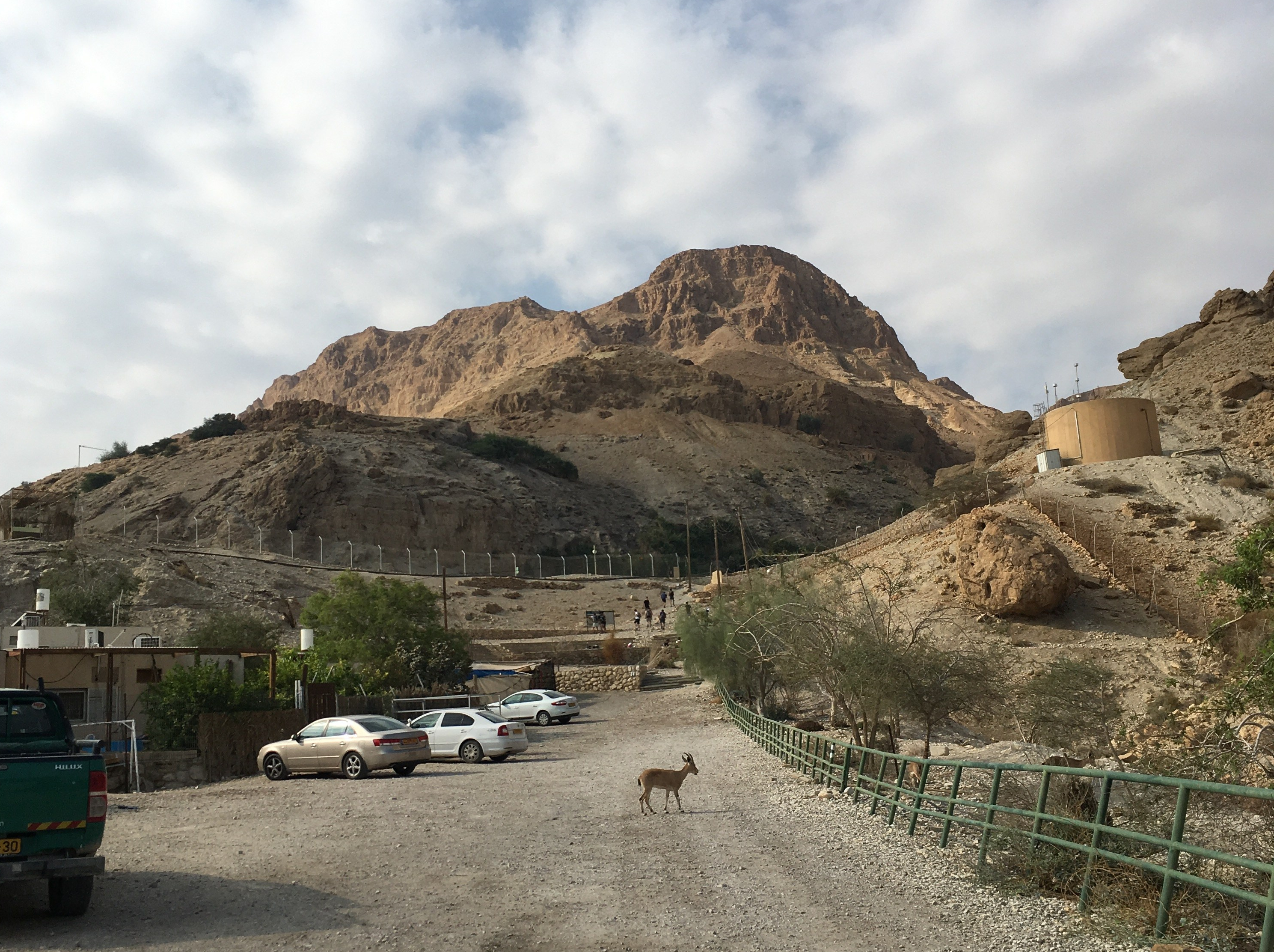
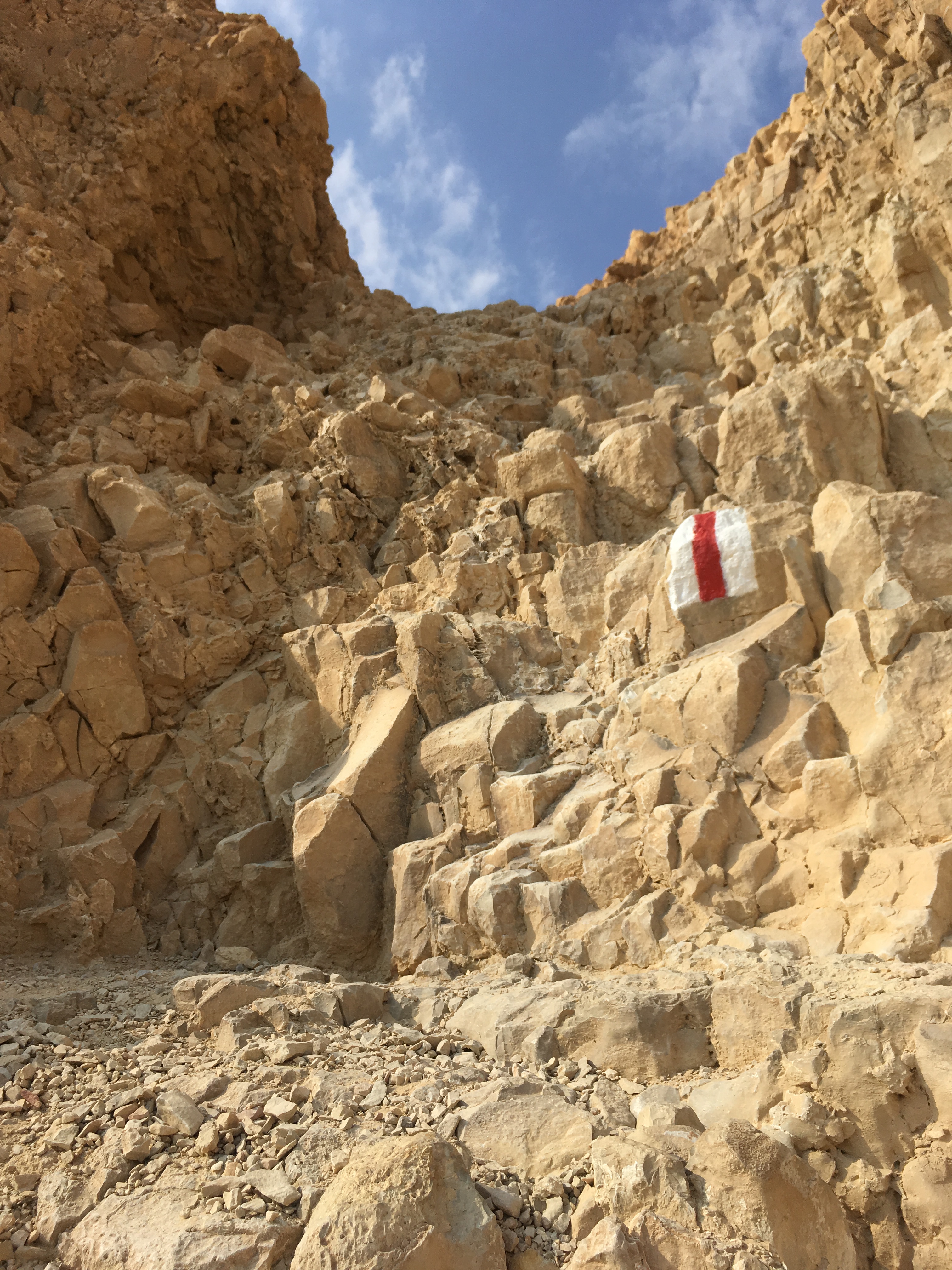
I took the bus from the Jerusalem Central Bus Station down to Ein Gedi Nature Reserve which took just over an hour. At the entrance, there was a free locker I could use to put all my unnecessary stuff and you can ask for a key to lock it. Then, after grabbing a map of the park, rather than entering from the entrance of the Ein Gedi Reserve, I went up the asphalt road that stretched from Route 90 up towards Ein Gedi Hostel and Field School. From there, I hiked up the black route (marked in the map below and came back down along the David Stream.
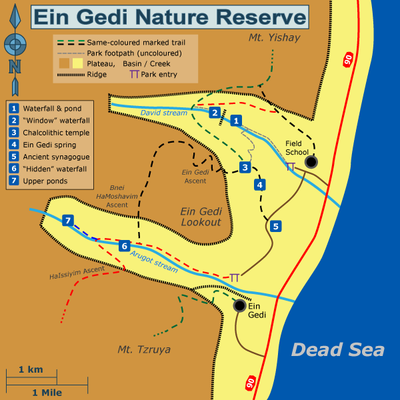
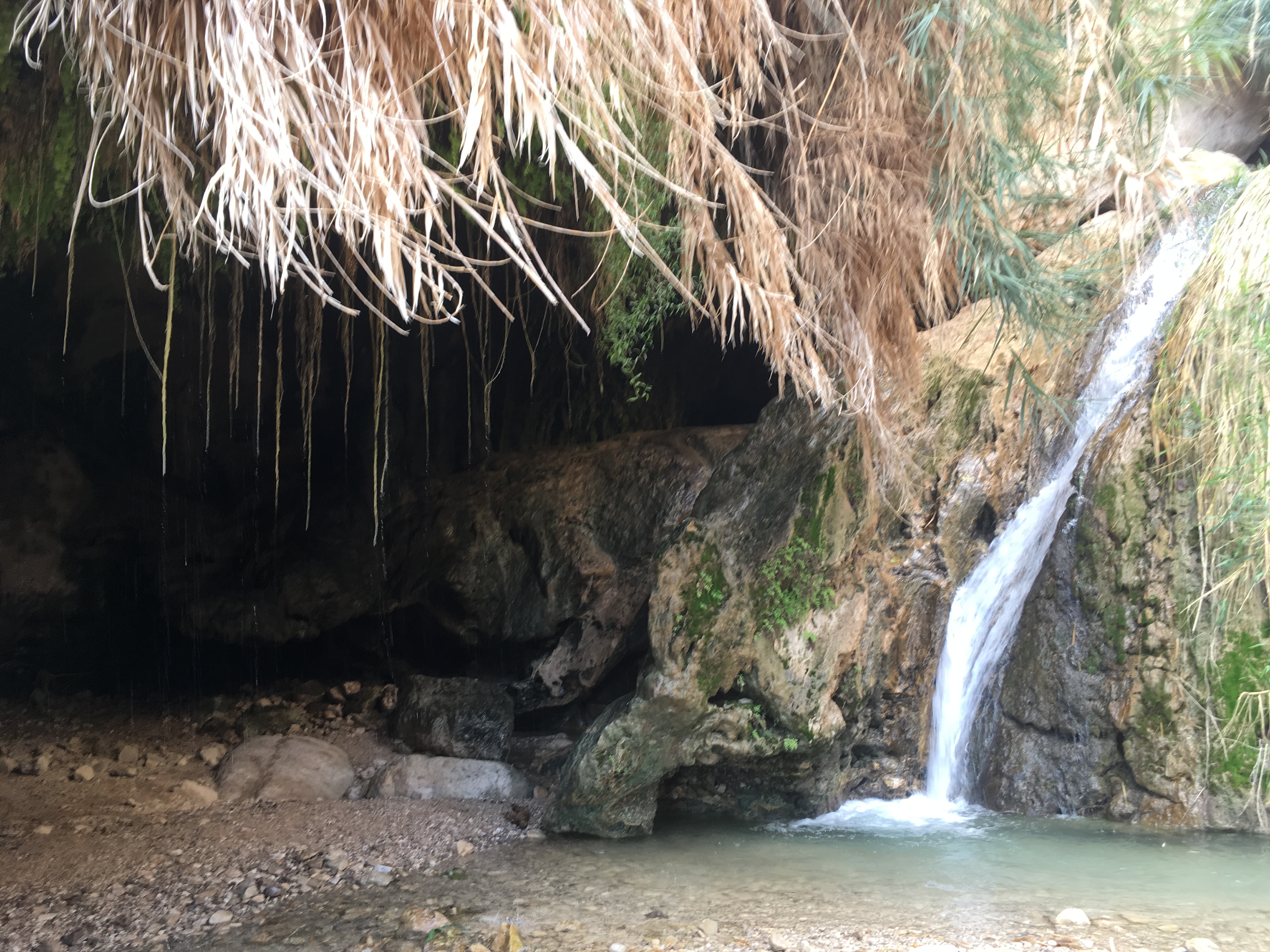
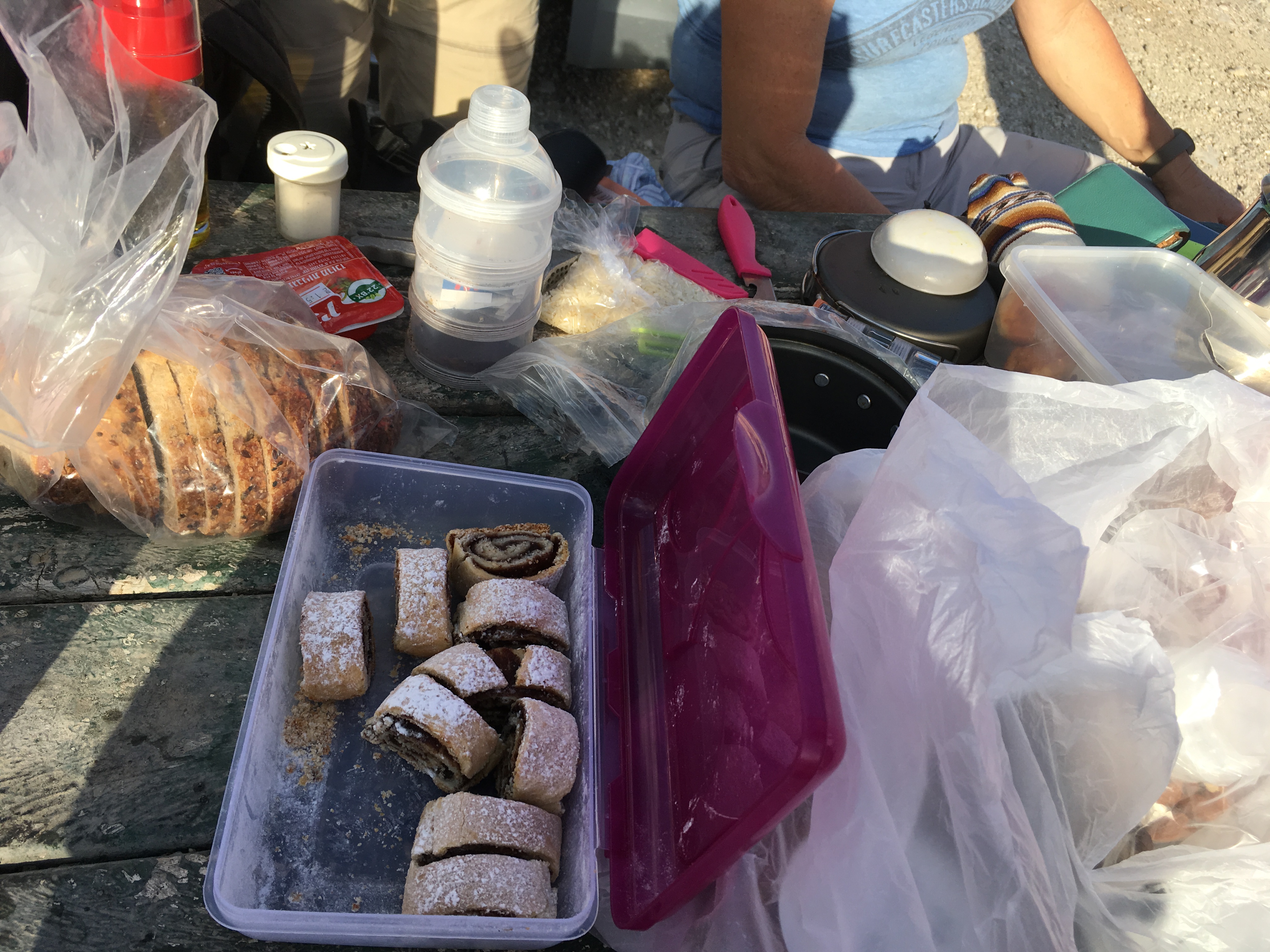
Now, the part was beautiful. The view from top looking down onto Dead Sea through the rivers and canyons was stunning. However, because it was Chanukah, a Jewish festival and holiday, the place was packed with people and and school trips. When I got to the lower waterfall, I had to wait for 20 minutes just waiting for people to get through. Which turned out to be great in the end since that was when I met a group of women from Tel Aviv with whom I hiked the rest of the way. They were all besties from school and they told me some stories about living and working in Tel Aviv. They even shared some food (date cake, a classic) with me and gave me a ride to Metsoke Dragot Junction. Because of the over-crowdedness, I decided to not hike the Nature Reserve the next day but explore other places instead.
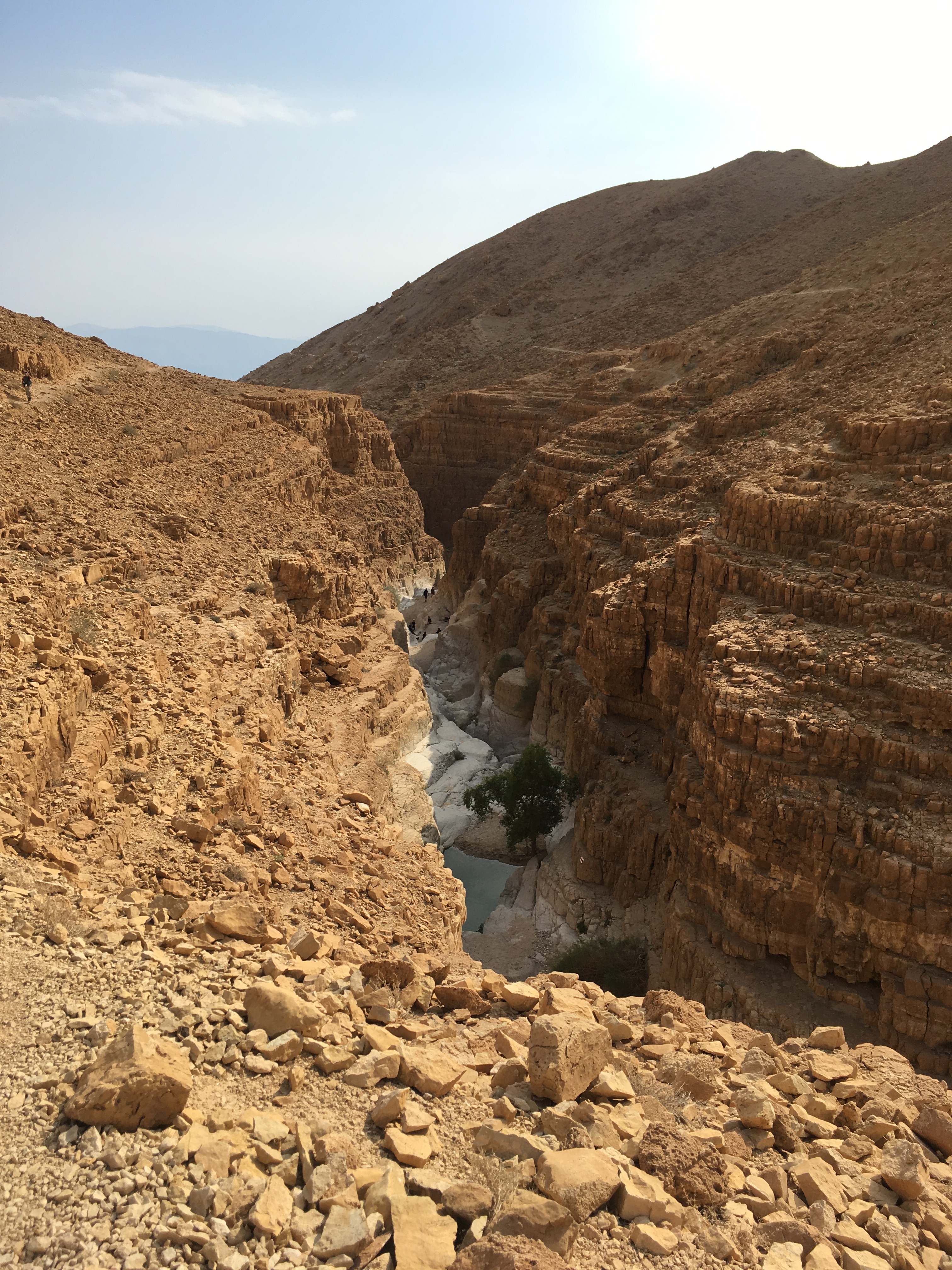
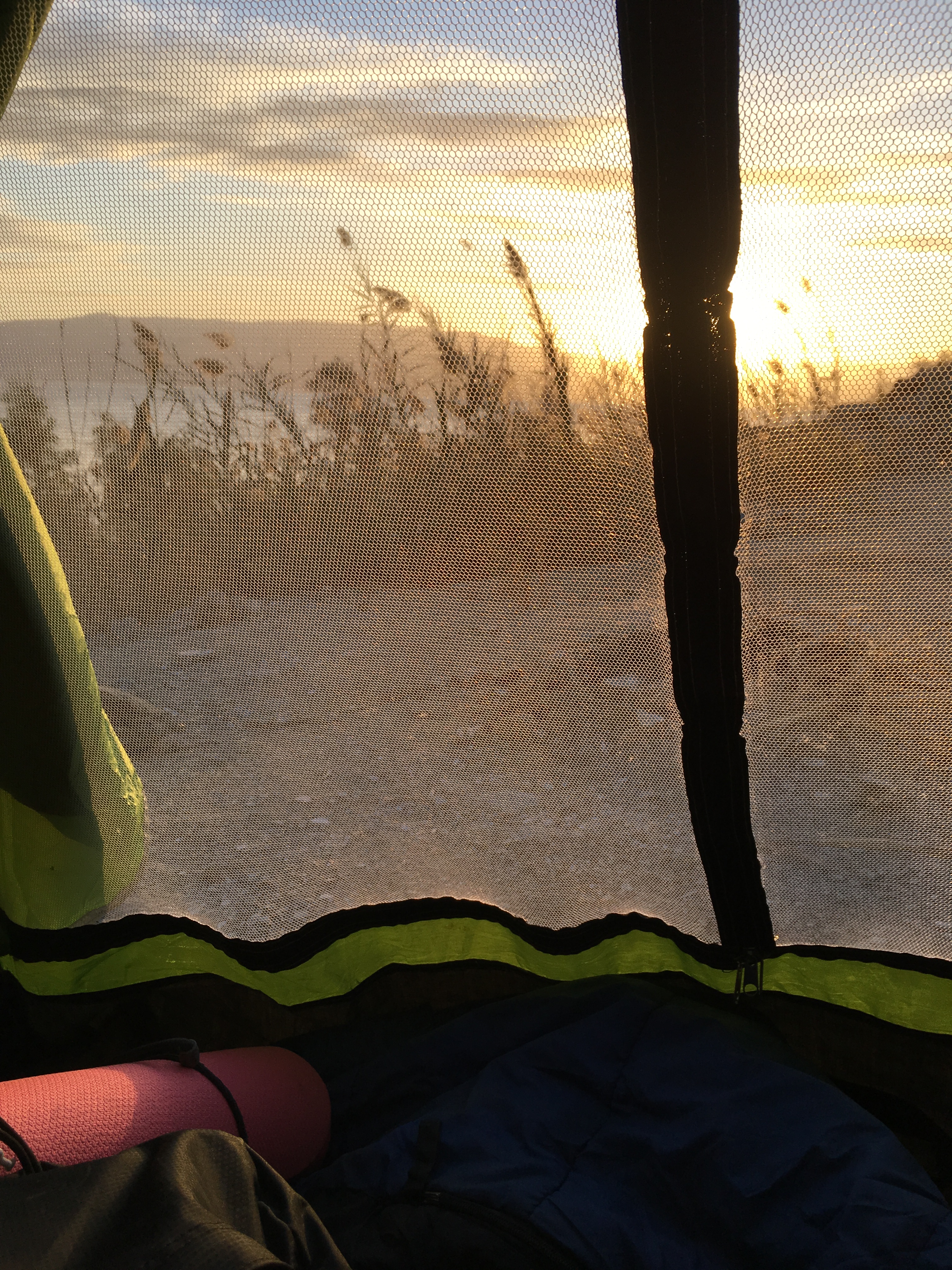
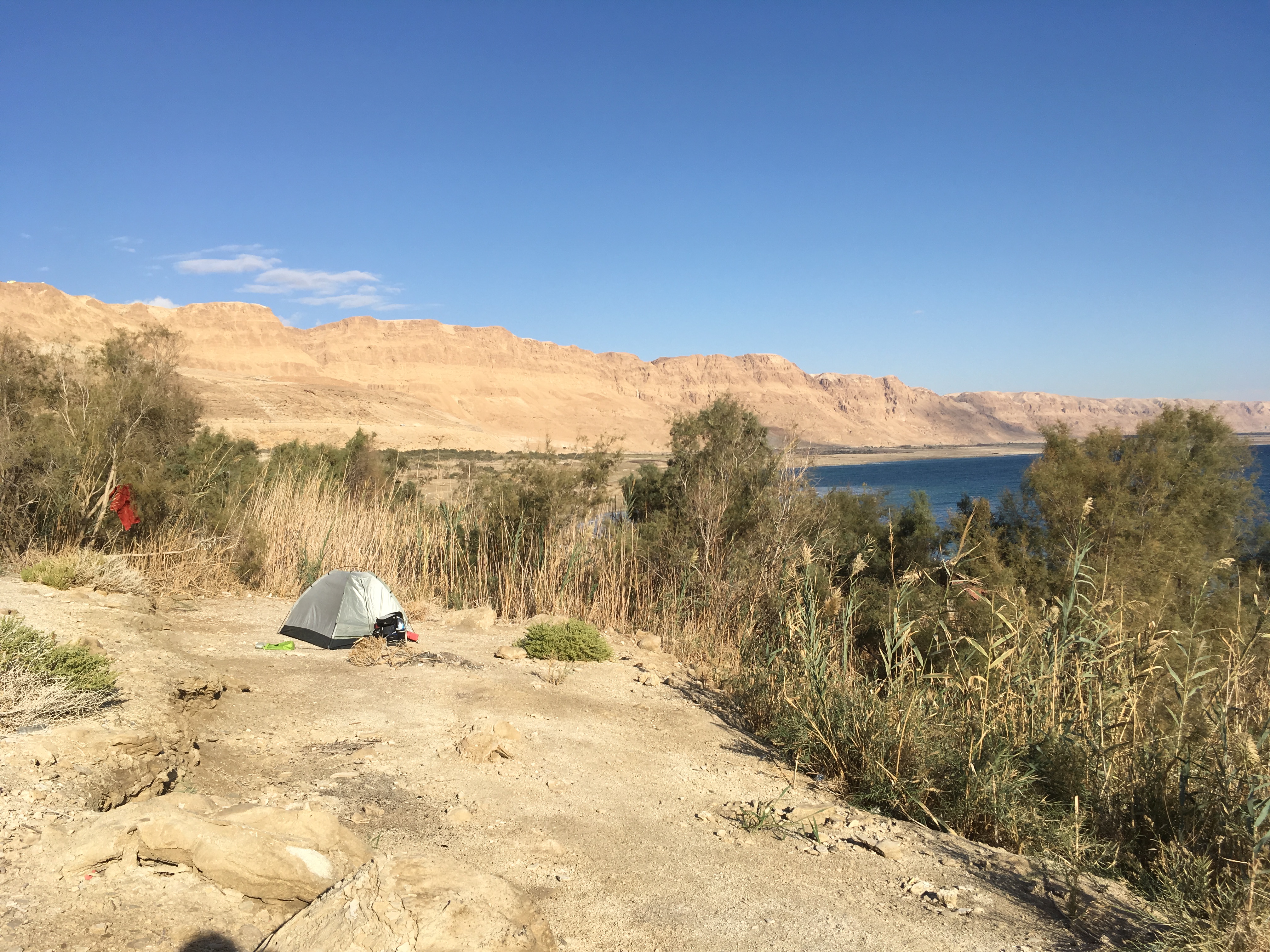
My couchsurfing host had told me that I could sleep on the beach by the dead sea, and right near the Metsoke Dragot Junction, I saw that other people had the same idea too.
I met a Spanish guy who has been cycling and was headed down to Egypt and all the way down south towards South Africa. I met some other travelers who had hitchhiked here too. There were also tents that looked like they have been set up there for a while and it turns out that some people have been living here for years without ever leaving the beach. Now, this amazed me. It was December and the beach was still hot. There were no sources of water within walking distance. There was also a little hut that’s been built and equipped with random furnitures that’s been left behind. Lots of flies and it wasn’t the cleanest place but somehow looked pretty cozy at night when the darkness hid everything I didn’t want to see.
At the Metsoke Dragot Junction, there is a barricade with Israeli soldiers (who gave us lots of water!) , I’m assuming because it is very close to the Green Line between Israel and the West Bank. The whole area is technically within the West Bank, within Palestinian territory despite the fact that most of the people I met there were from Jerusalem or Tel Aviv. Now, I’m not going to go into politics because I’ve stayed both in Israel and Palestine long enough (but never enough) to know that I understand nothing of the complex political situation here and I’m just here to talk about my personal experience, about the beautiful scenery and the beautiful people I met. I just want to acknowledge the fact that I understand that I’m privileged to have the passport to be able to visit places like these to have met the people I’ve met.
Whenever I tell someone that I’m in Israel or Palestine, the first question people ask me is “Is it dangerous there?” Maybe it’s because I’m from a country that’s far away and we don’t really know what’s going on in this part of the world, just like I had no clue before I decided to take a visit. Dangerous, what does that even mean? I wish I could tell my friends back home in Japan that it isn’t dangerous to visit but more dangerous not to visit and to have assumptions without having seen for oneself what is out there. (and I’m talking very generally because this is the same with any aspects of life, I think. Not that I know anything about it.)
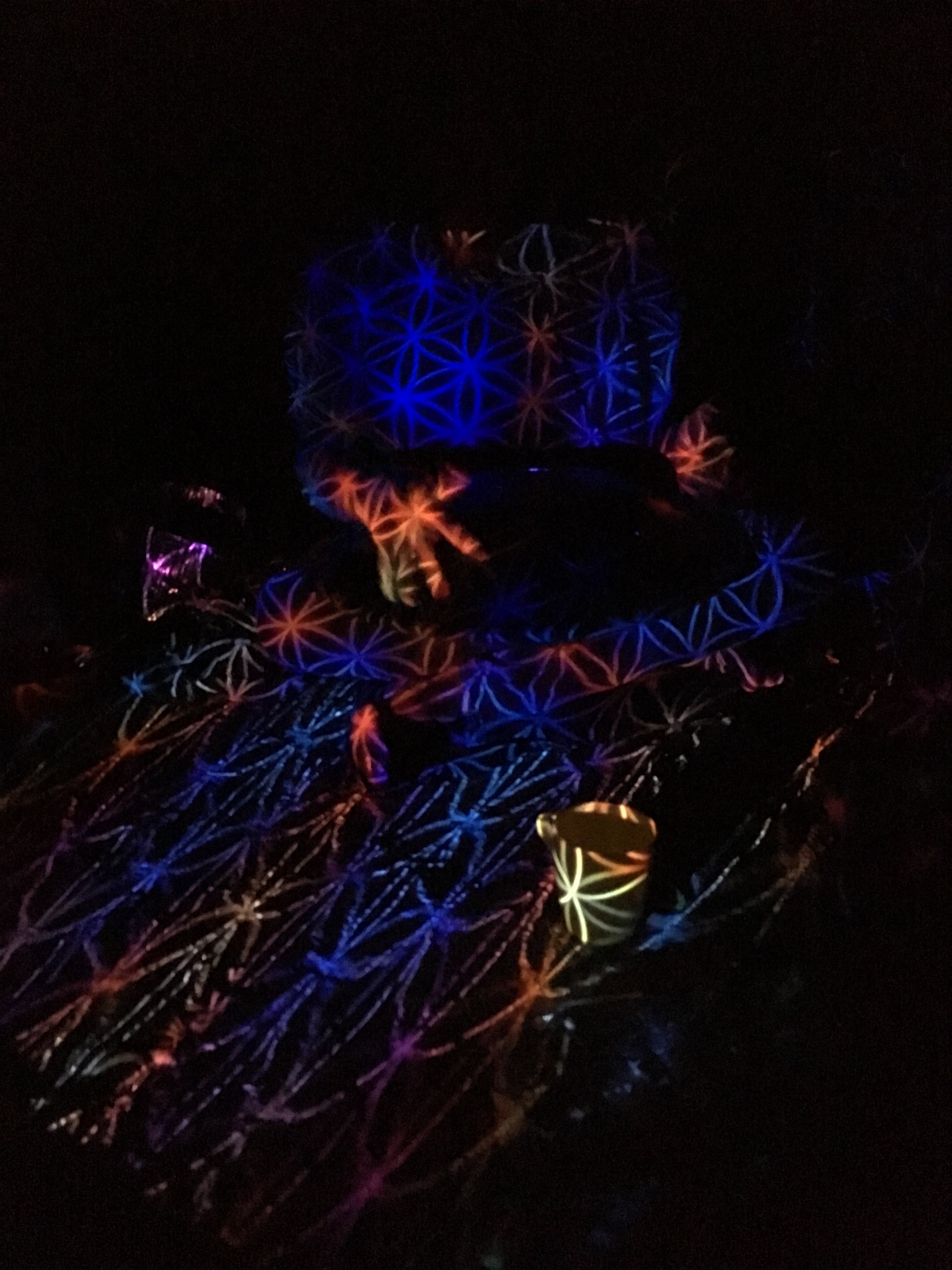
It was a strange night. People gathered, a Russian guy was playing a hang drum, people started singing and someone else had brought a projector and did some small-scale projection mapping on the instrument and the musician. Nobody knew each other, but the collaboration was pretty magical. On the other side of the Dead Sea, you could see Jordan lighting up. The beach was warm enough to sleep with just my sleeping bag but someone on the beach told me I could use one of the empty tents. I had one of the best sleeps out of all my camping trips.
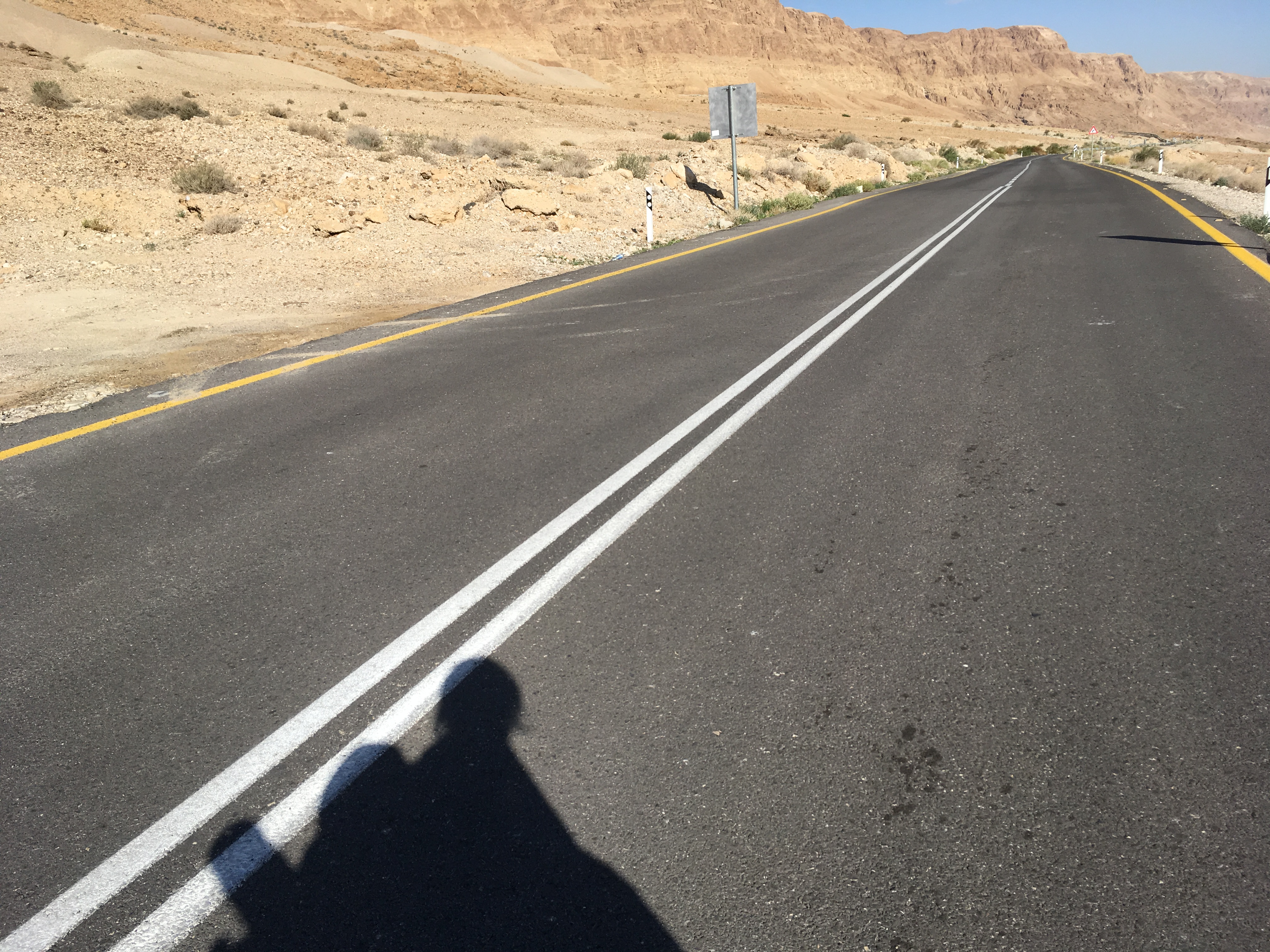
Next morning, I left early to hike up the asphalt road that forked away in an ascent from the junction that lead to the entrance to Wadi Darga. The climb up was beautiful but What I didn’t realize was that it was quite a long way up and sun was already scorching by the time I started walking. After 15 minutes, a truck came from behind and stopped. The driver offered me a ride and I was super grateful since I was getting worried that the sun may set before I even reached the canyons. I got to practice my Arabic with the driver and his friend and we had a nice little chat (or I like to believe I understood what they were saying) and they even offered me a whole bottle of water, the last of what they had left, and when I refused, they insisted. My heart keeps melting from people’s kindness during this trip, seriously.
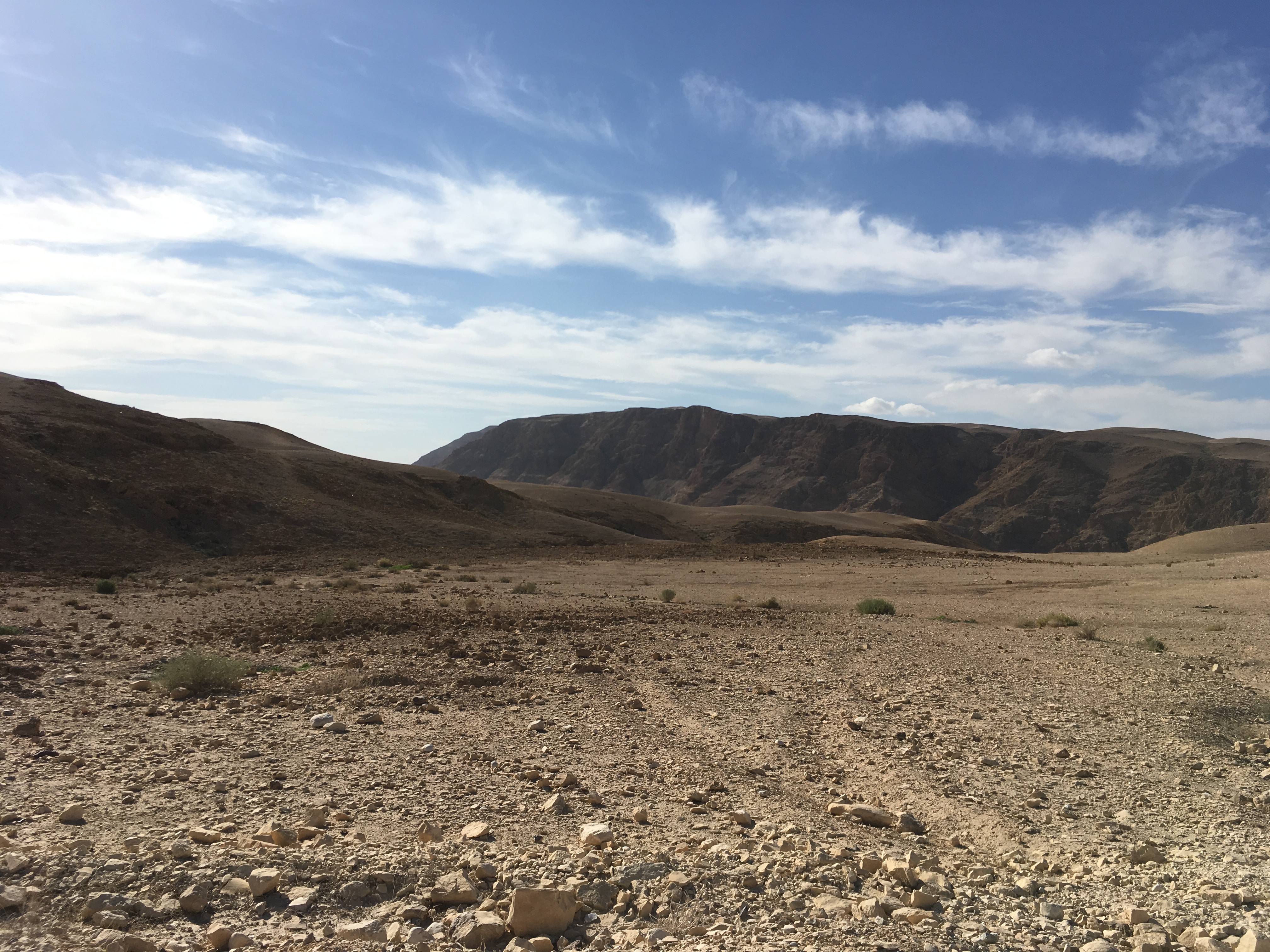
I started walking. I was excited since this would be my first time walking alone in a desert. It was so quiet and so calm. I had missed the solitude and it was refreshing.
Then I met a family. They were from Jerusalem, on a family vacation. It turns out that they live very close from where I was staying. A father, a mother with their 3 children. The father was a geologist specializing in deserts which was perfect because I was getting a free lecture about the geology of the place we were walking. He also gave me some tips about exploring the area, how it may be dangerous after a rainfall because there can be a flush flood in the canyons. They asked me if I wanted to join them on the same route, so I said yes. When I look back at my travels, the things that I remember the most are the chance encounters like these.
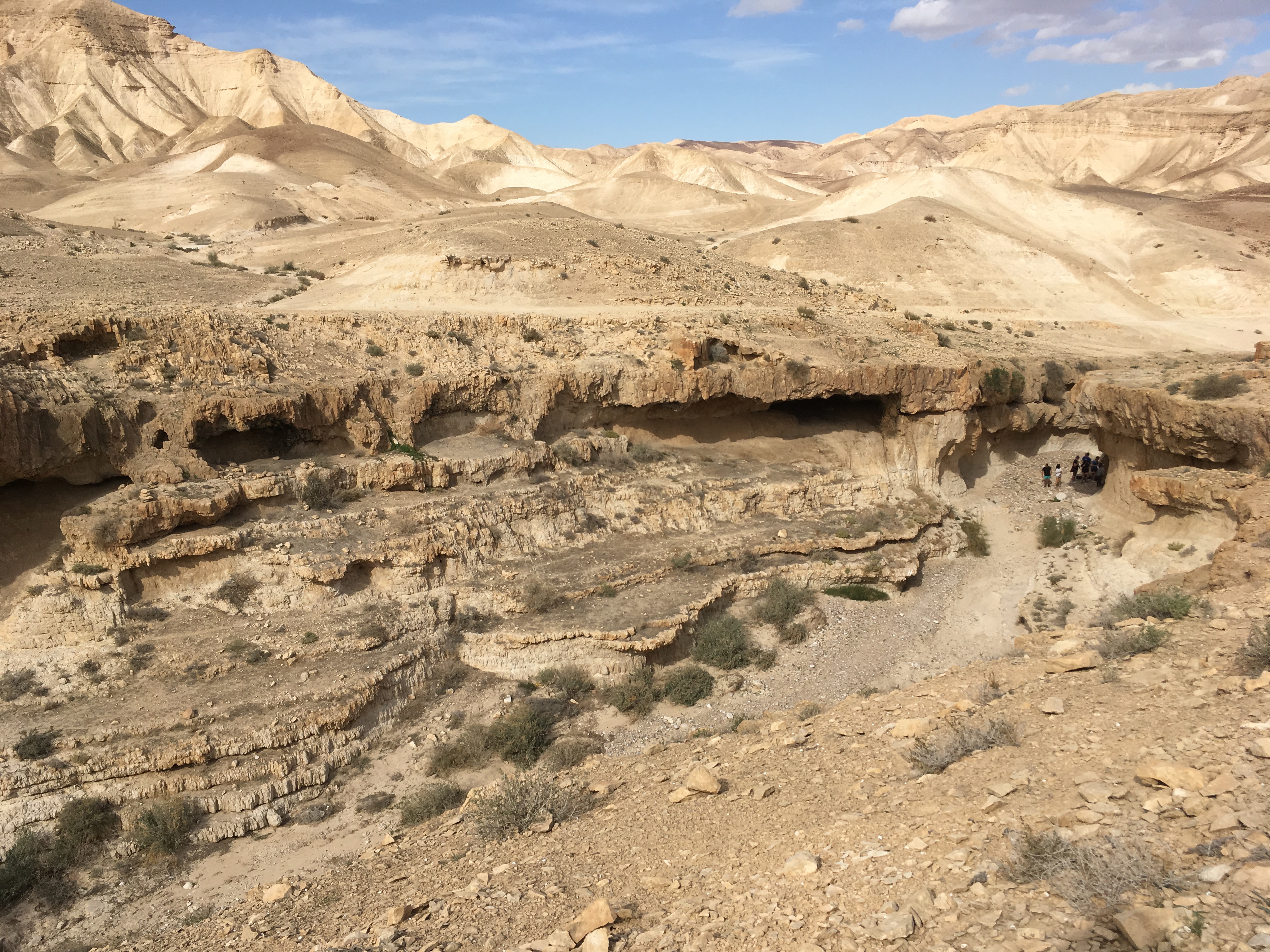
The geologist had walked trails around the country and around the world, he had even written a book about walking and hiking. His wife was also very interesting, working in something to do with organizational management and we exchanged opinions on gender-equality in working environments in both Japan and Israel. Their eldest son was interested in Physics and languages, had just finished high school and was going to Yeshiva, a Jewish Religious school, before he went on to study in university.
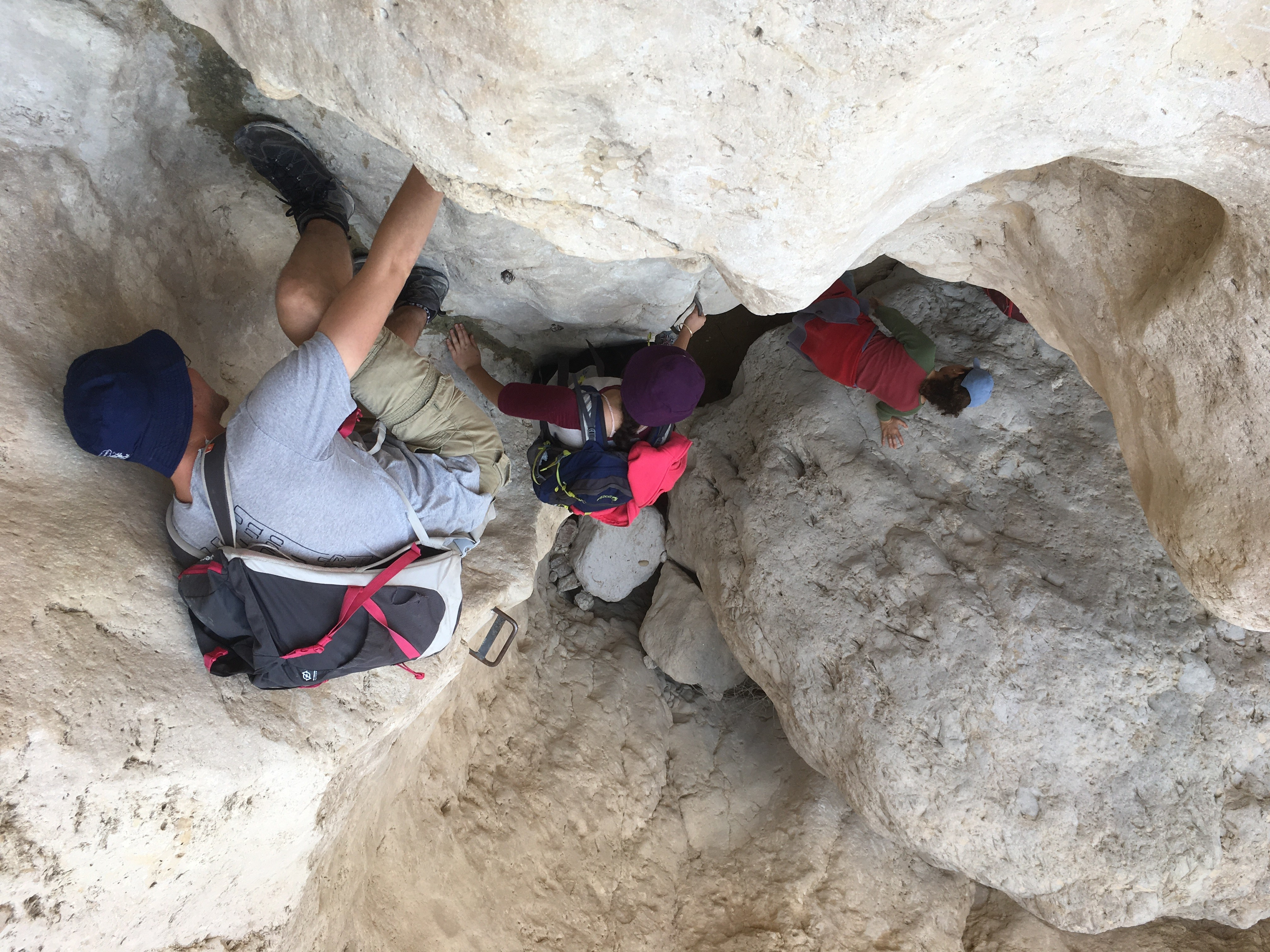
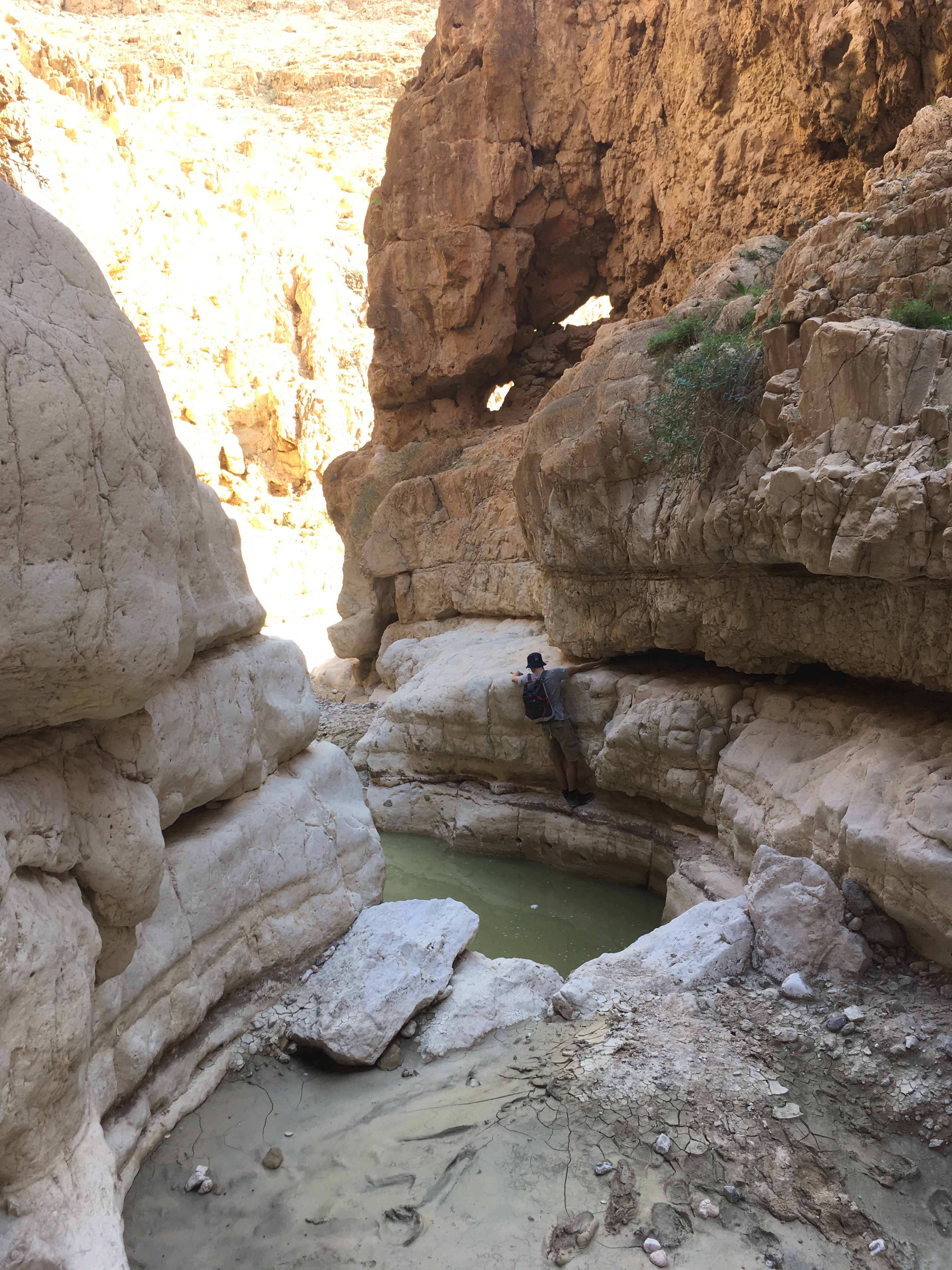
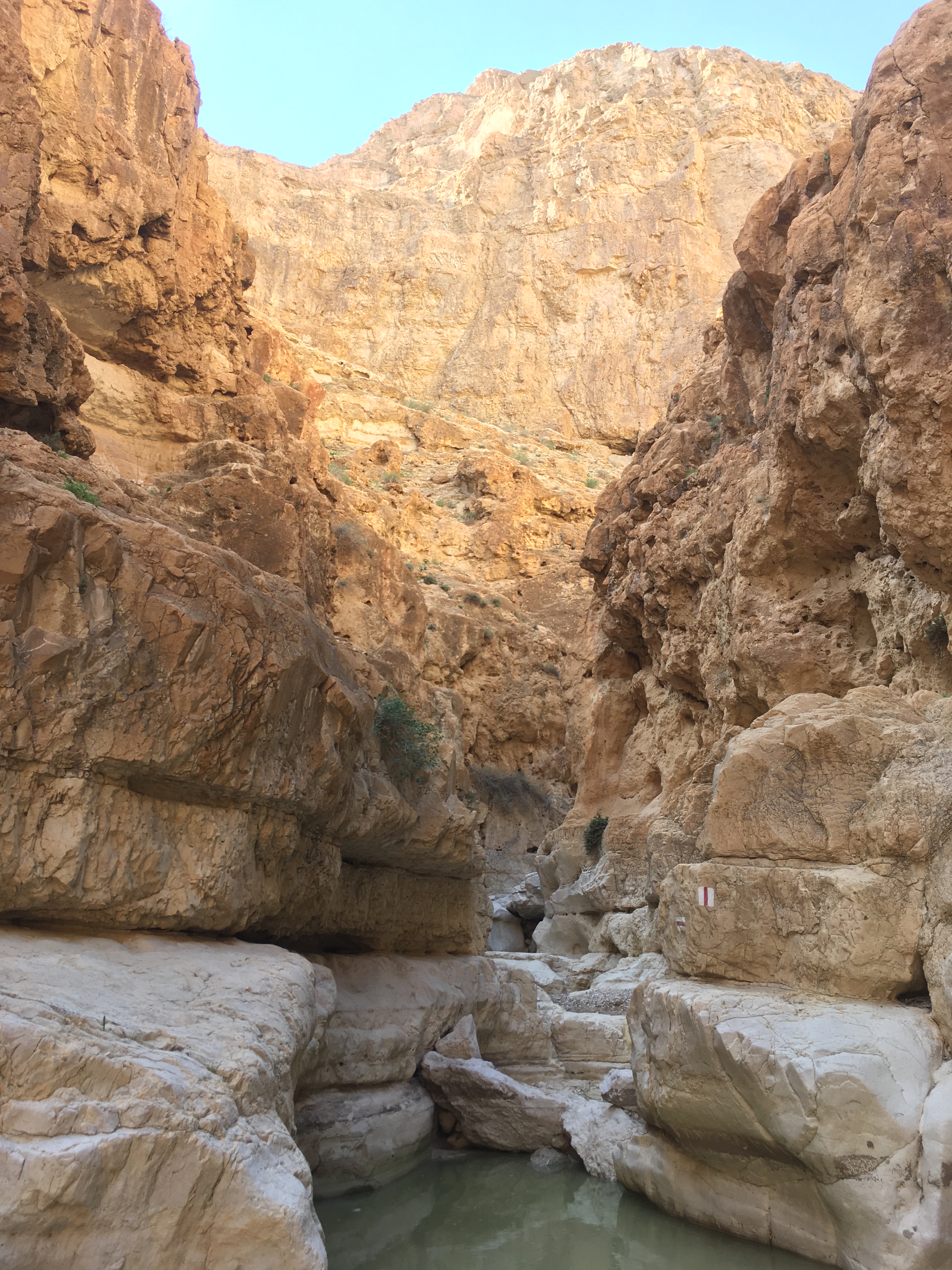
We also met a huuuuge family with 15 children (apparently all related) all doing the hike together. Coming from a country with low fertility rate problems and lack of children, it was interesting to see a family this big.
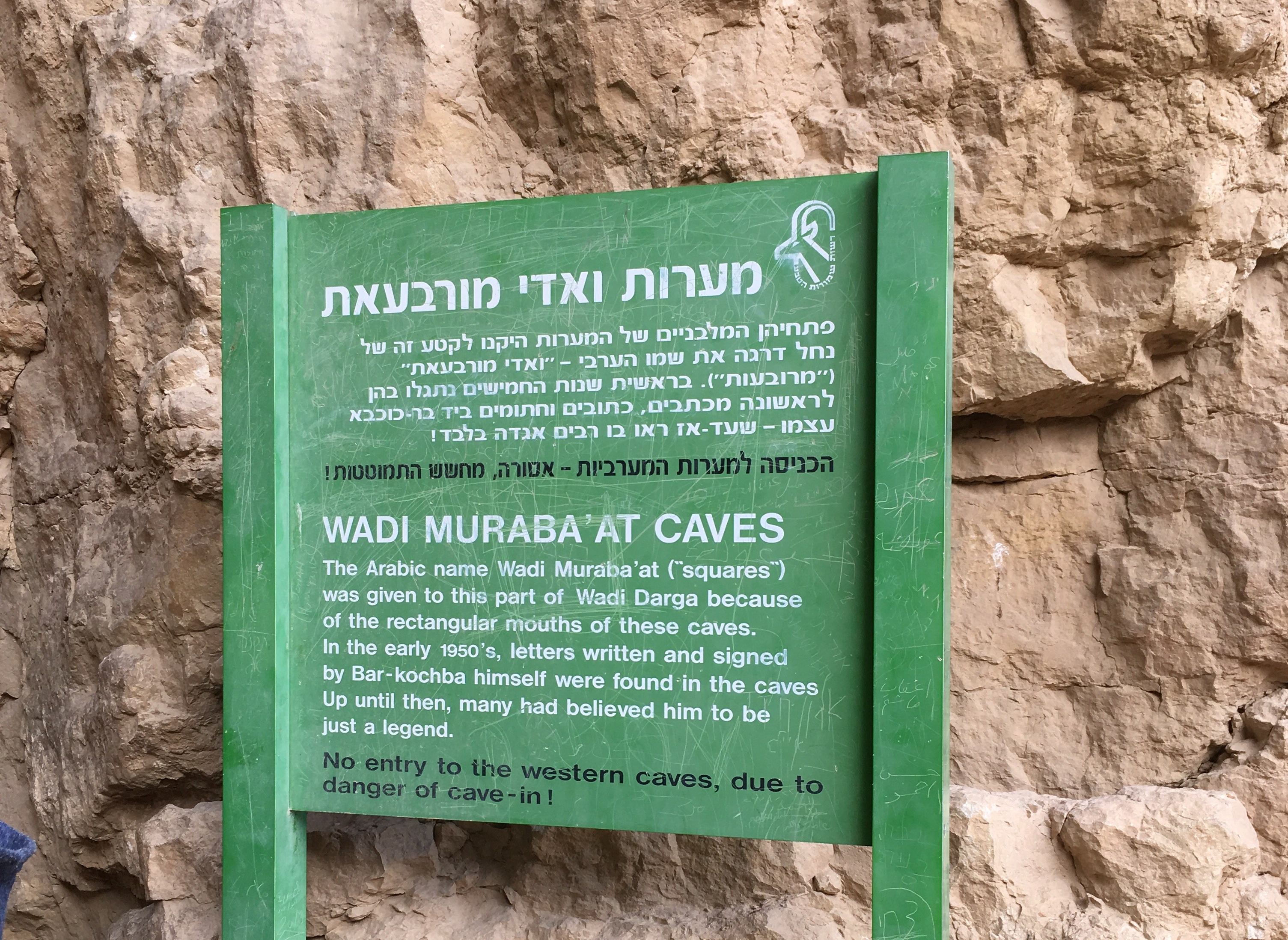
At night, they invited me to their bonfire and we sat around the fire talking, playing music and staring at the stars. By this time, I was starting to see some clouds but from the weather forecasts I was hoping it would hold, until the next day at least.
Now, I knew that traveling without a tent was a bit risky but that night, I really regretted not bringing one. I forgot at which time, but it started to rain. I was sleeping on my yoga mat in my sleeping tent and it was freezing compared to the previous night on the beach. Who knew a 15 minute car ride up the canyons could make such a big difference in how cold I felt? So when it started raining and I found no shelter (obviously), I rummaged around and found a big rock to shelter myself from the wind and then put my yoga mat on top of me just to avoid direct rain. It may not have helped too much but I manage to sleep through it.
Next morning, I found myself sleeping on top of large chunks of bird (?) poo. It didn’t register me the night before when it was dark and I was cold and wet and miserable. What a start to the day.
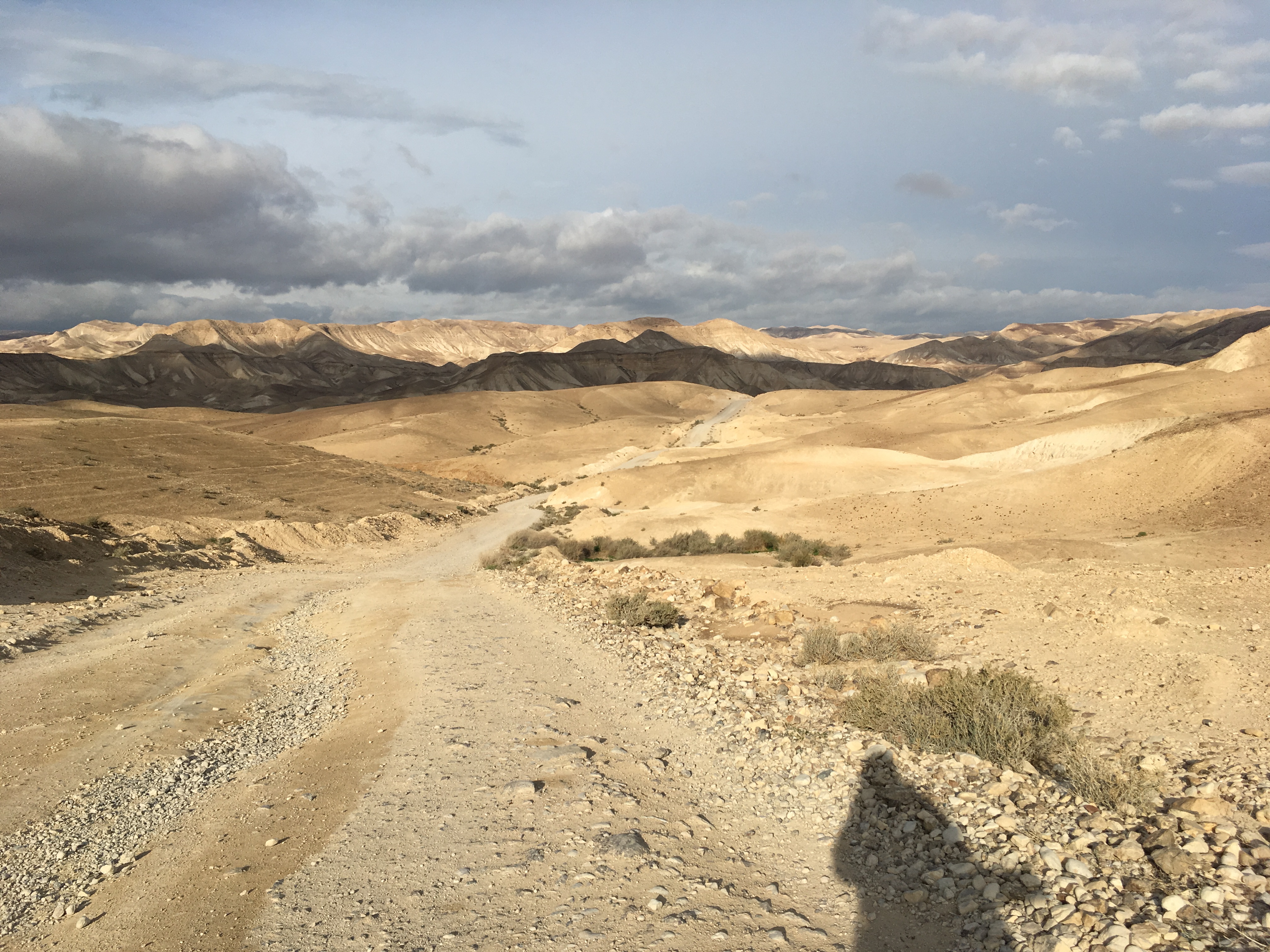
The weather wasn’t great and I knew that it was only going to go downhill so I decided to start early and to avoid going down into the canyons. I decided to walk the route around the canyons and down to a , Mitspe Shalem, down south.
On this hike, I truly got to enjoy my solitude. There was nobody around other than the occasional cars that passed me by headed towards the view point. Many of them stopped and asked me if I wanted a ride. Some of them gave me some water too and offered me tea. Again, I was truly grateful for their kindness, something I was not used to growing up in a big city like Tokyo. I said no thanks, though. Hiking for me was a sort of meditation and it was so refreshing, relaxing. And I really needed it.
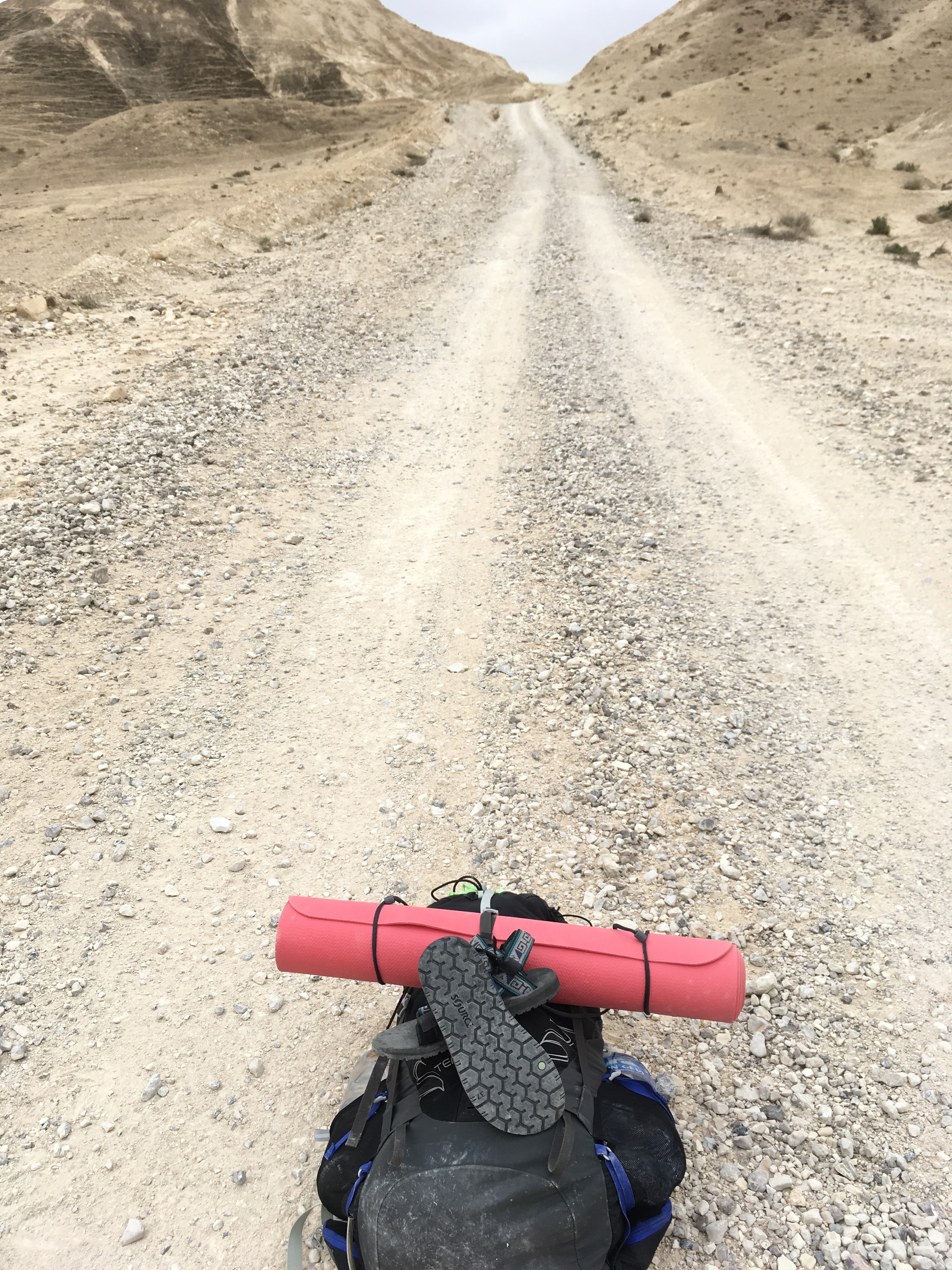
I walked and walked and there was nothing but desert. It was quite windy and wind was the only thing I heard for a while. And it felt strangely comfortable as I concentrated on setting one foot in front after another. It was so simple.
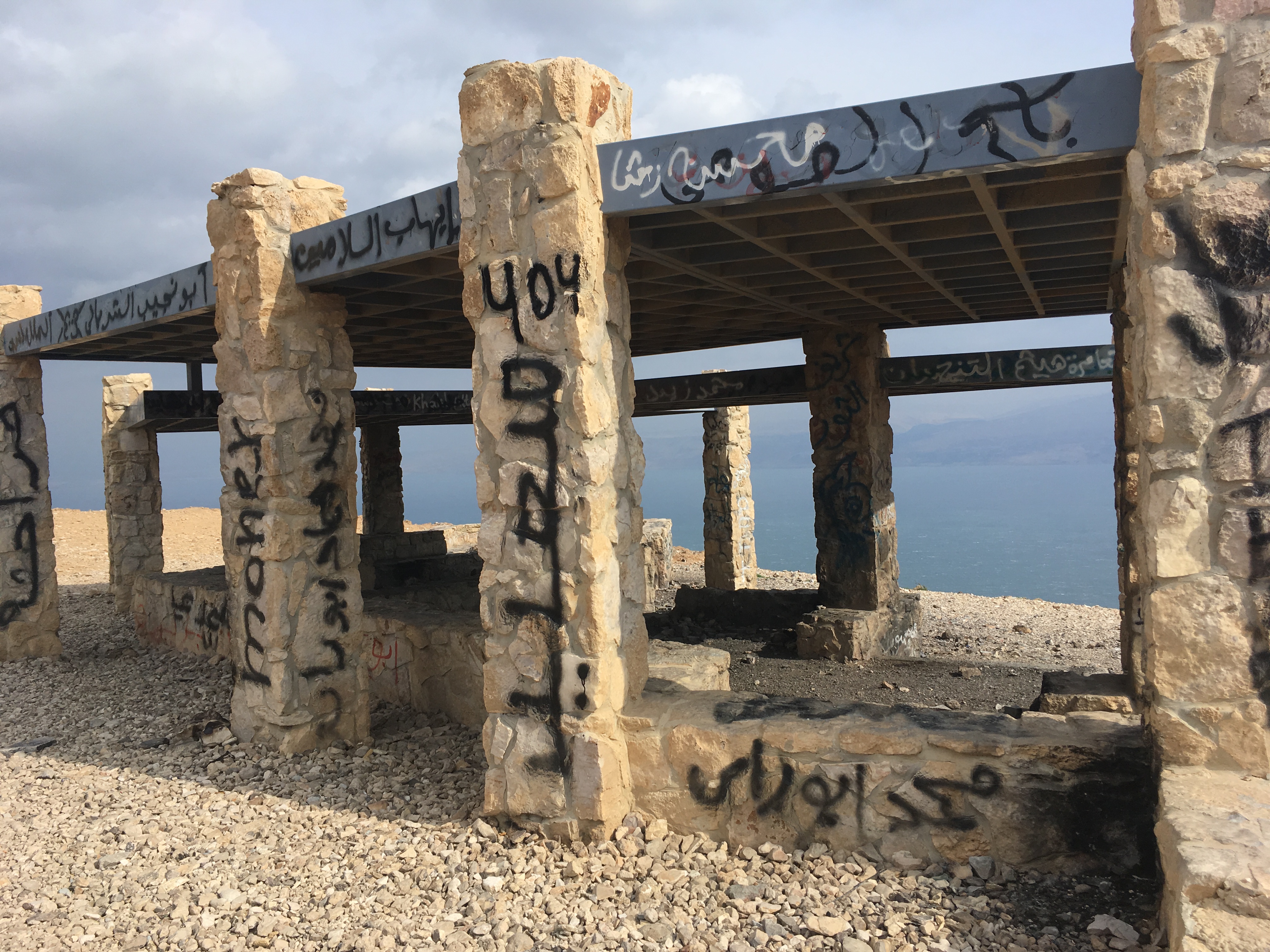
I reached a viewpoint where there was a big concrete structure with a lot of graffitis. I guess people come up here to enjoy the view, to hang out. On the day I went, there was nobody.
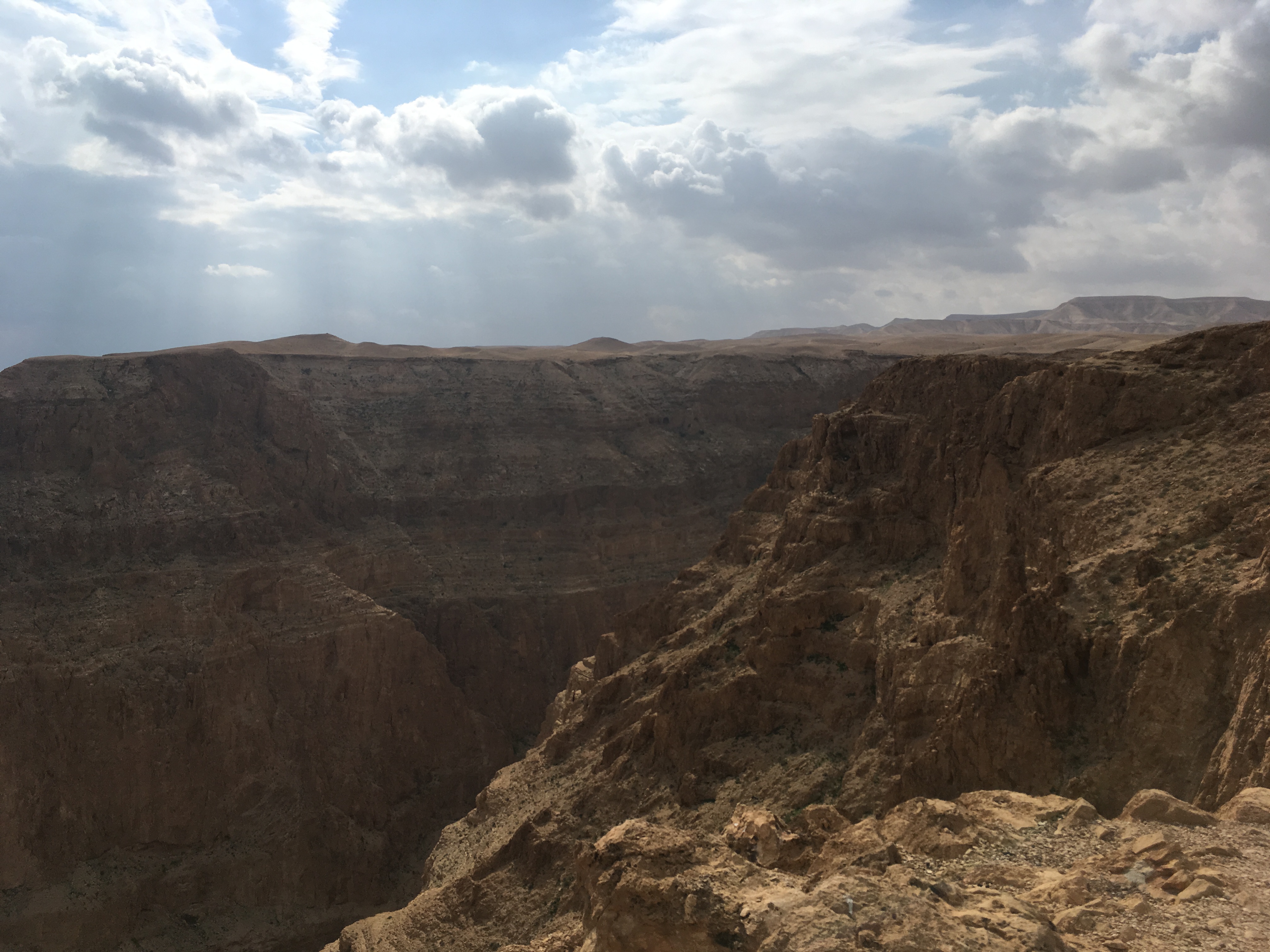
I saw some clouds in the distance which looked like it could arrive where I was standing in a couple of hours. I knew, that the weather was going to get worse and I decided to pick up my speed a little so I didn’t have to descend in the rain where rocks could get slippery.
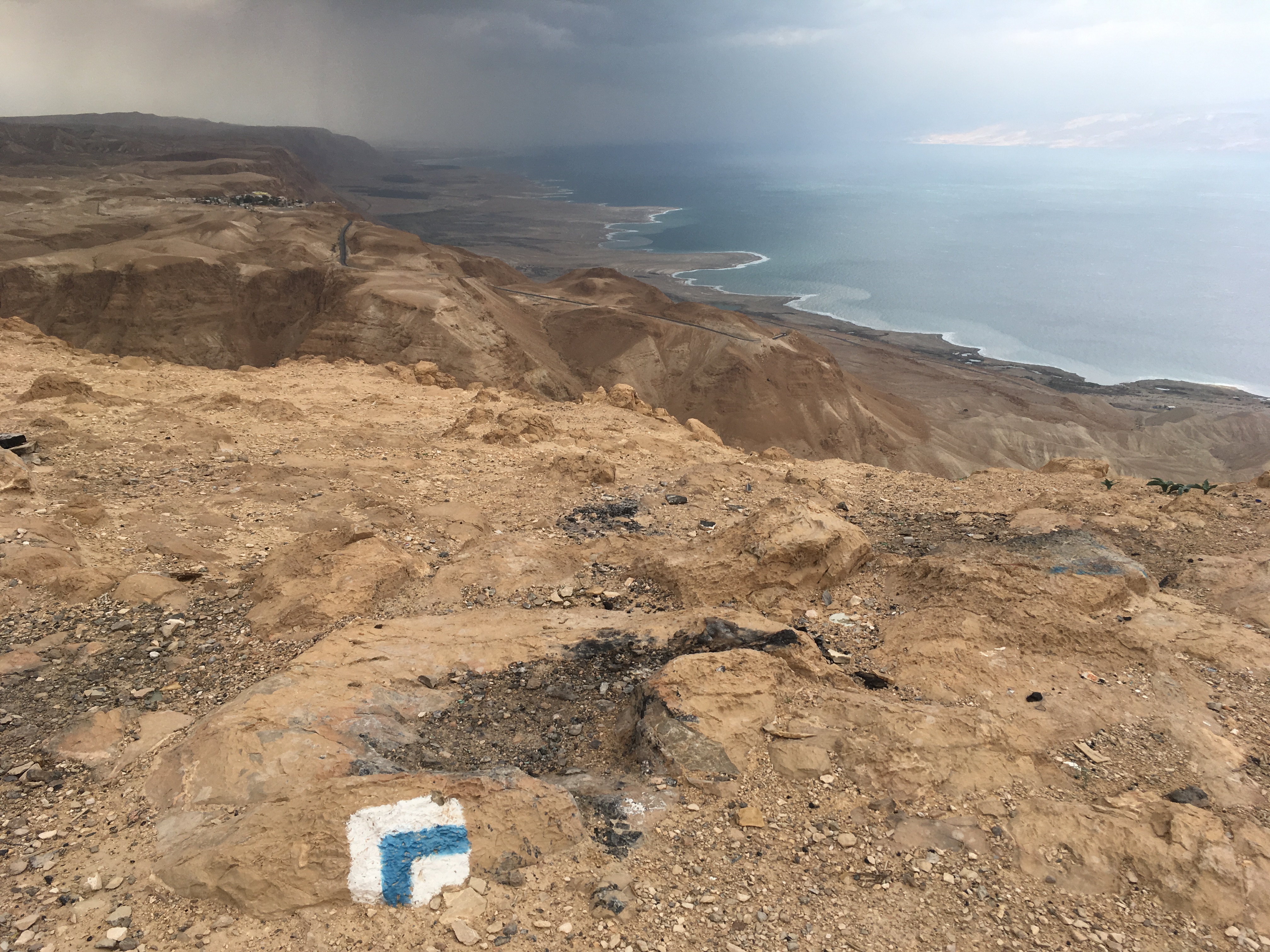
The trail downhill is one of the oldest mule paths where bedouins used to use to go up and down (according to the geologist). It was marked in the offline map I was using but I was quite skeptical about the route condition.
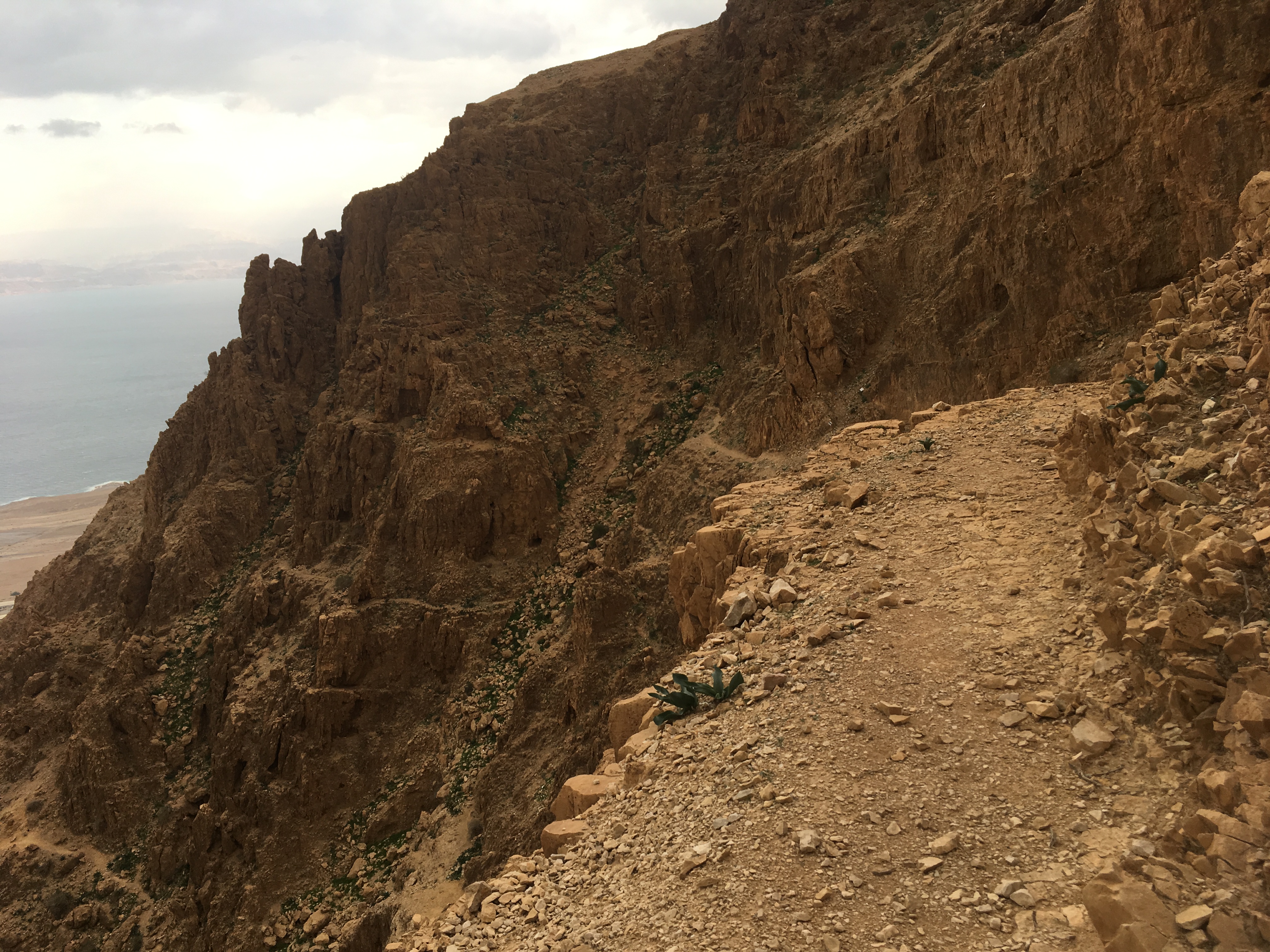
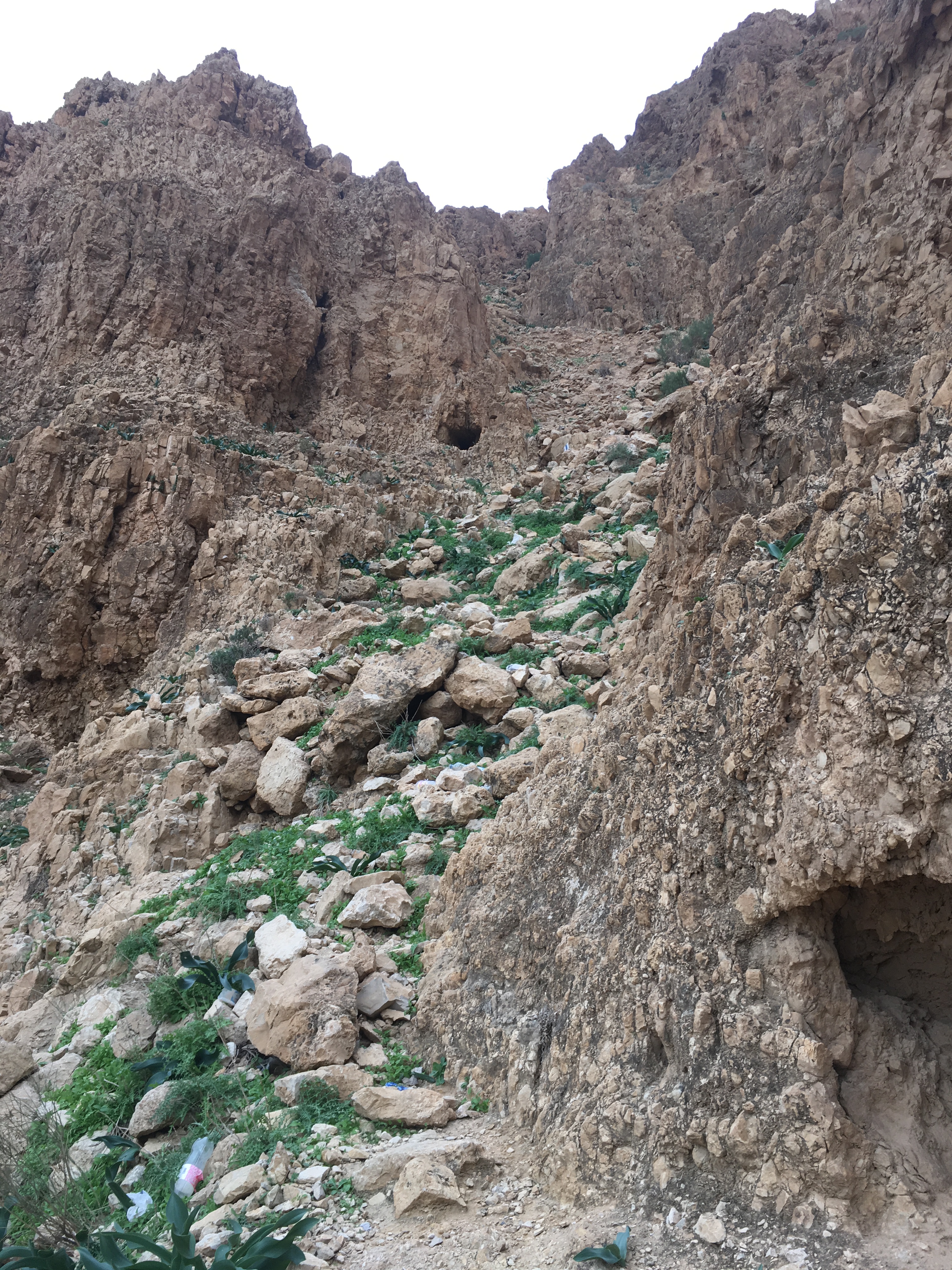
The path was clearly marked, yet it was not the easiest place to walk. There were too many loose rocks and stones that would crumble underneath your foot and it was also a steep downhill. Judging by the way it looked, not many people were using it these days.
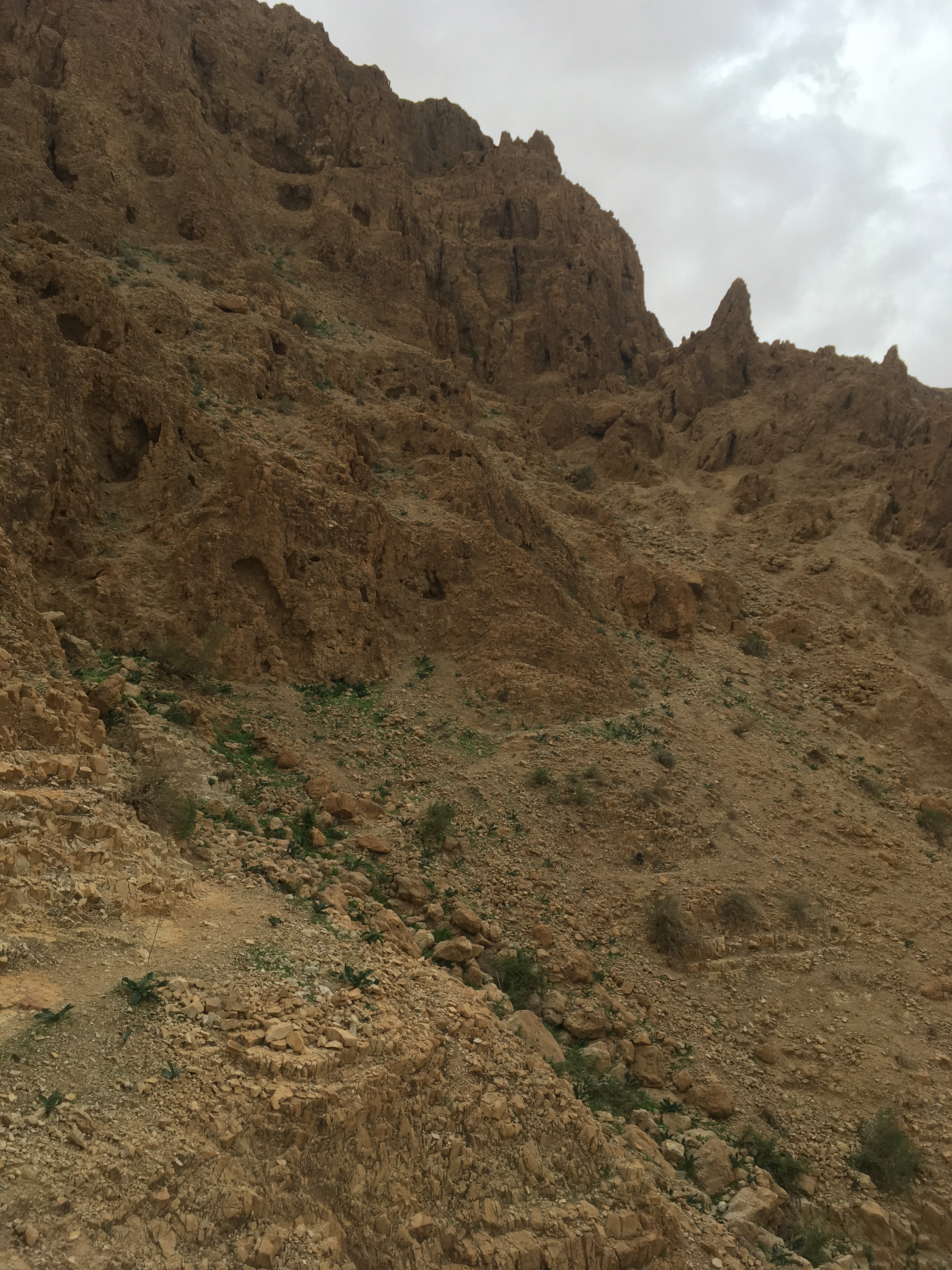
The sky was getting darker with the rainy clouds and I was getting quite frustrated since the rain would make it much more difficult for me to walk down. I walked as fast as I could but trying not to fall off the edge. Maybe taking this route on my own wasn’t the best idea.
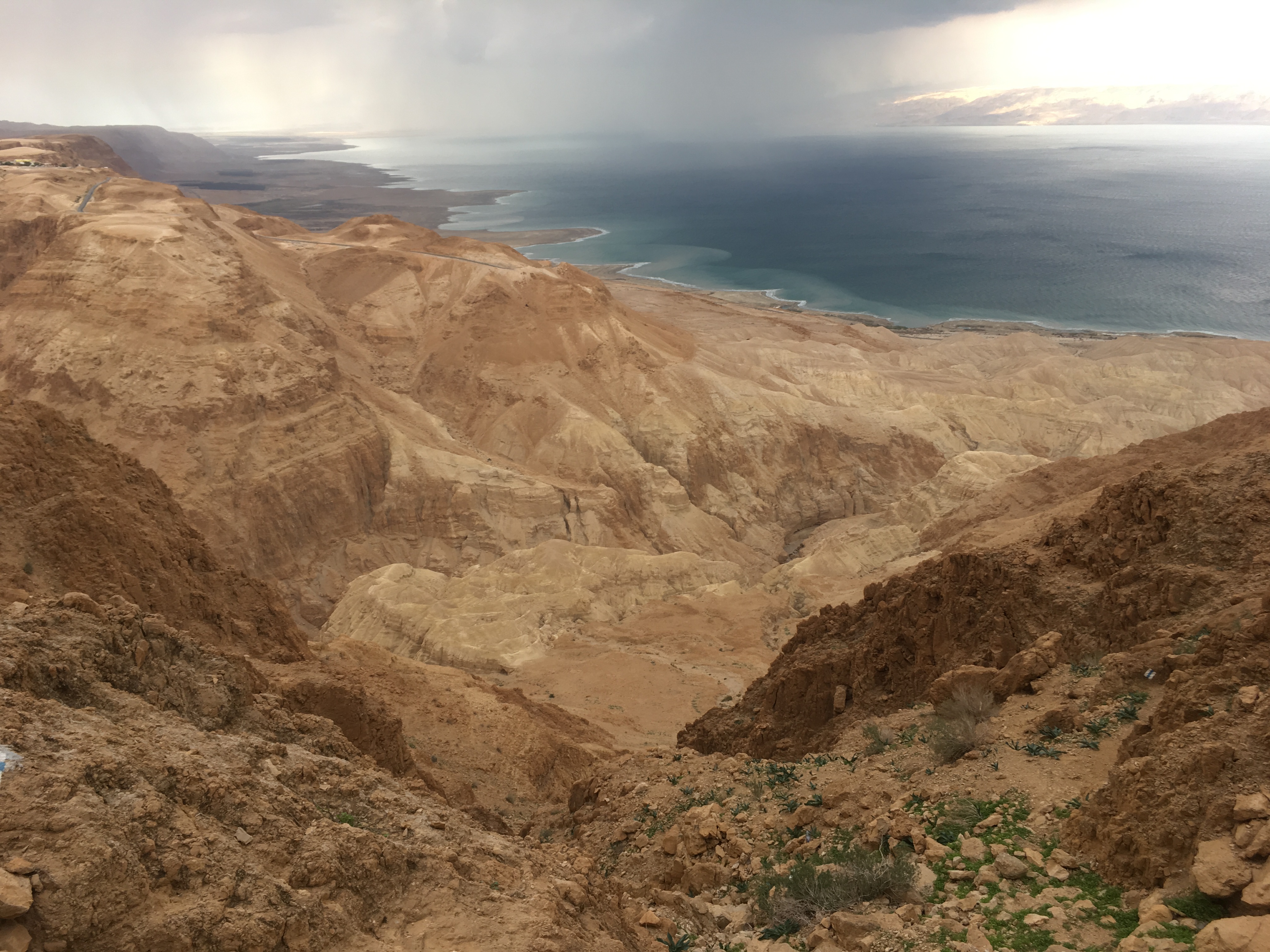
As soon as I arrived at Mitspe Shalem, a Jewish settlement at the foot of the trail, it started to rain heavily and I breathed a sigh of relief. I was truly happy to be alive. At the entrance of the settlement, there was a group of girls in combat uniforms and guns, with an instructor. Two of them gave me a ride from to the main road so I could catch a bus. In Israel, there is a 2 year mandatory military service for both girls and boys. Usually, people attend the army after their high school graduation, but there are also people who go to religious schools (Yeshiva for boys, Midrasha for girls) like the boy from the family I met. But there are others who choose to take a training course before attending the army to prepare them more for the military service and at Mitspe Shalem, there was a training program like that.
This whole trip was an interesting experience because although I didn’t meet a whole lot of people, I got to meet a wide range of people from different backgrounds in this very geographically small space. All I know is, as always, I was touched by a lot of kindness along the way that helped me bring back a piece of memory that I can forever treasure.